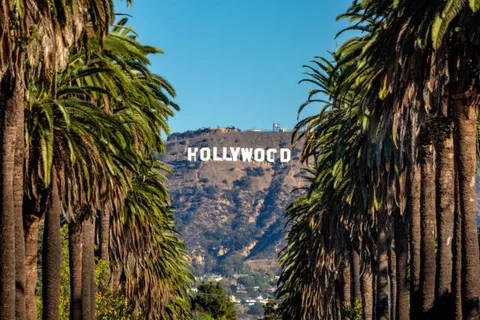
Hollywood has been the backdrop for some of the most iconic moments in cinema history. But it is more than a backdrop — it is a living, breathing city where the real world and the reel world collide on every block. The streets that appear in your favorite movies are not locked behind studio gates. They are right there, waiting.
This guide covers the real Hollywood movie locations you can visit, the stories behind them, and how to make the most of experiencing them the way they were meant to be seen: with the knowledge of someone who has been there since long before the cameras rolled.
Why Hollywood Movie Locations Matter to Film Fans
When you stand on a street corner and recognize it from a scene you love, something shifts. The movie becomes real. The story gets a physical address. That is why film location tourism has exploded into one of the most compelling ways to experience Los Angeles.
Studios have known this for a century. The sidewalks of Hollywood, the hills above Sunset, the storefronts on Hollywood Boulevard — they have all stood in for everything from New York back alleys to futuristic cities to small-town Main Streets. But the locations themselves tell their own story, one that is entirely Hollywood.
The Hollywood Walk of Fame
The Hollywood Walk of Fame runs nearly two miles along Hollywood Boulevard and Vine Street. Over 2,700 brass stars are embedded in the pink terrazzo sidewalk, each one honoring a figure from the entertainment industry.
The Walk of Fame is not just a tourist photo opportunity. It is a record of Hollywood history, from the earliest days of silent film to contemporary box office giants. Every star has a story: who lobbied for it, who showed up to the ceremony, and who — famously — did not.
What to know: The stars are organized loosely by category — film, television, music, radio, and live theater — though they are not in strict order. If you are looking for a specific star, the Hollywood Chamber of Commerce website has a searchable map.
What makes it better with a guide: Most visitors walk past dozens of stars without knowing the stories behind them. A Hollywood insider can connect the names on the sidewalk to the careers, controversies, and cultural moments that made them significant.
TCL Chinese Theatre (formerly Grauman’s Chinese Theatre)
Few locations in Hollywood are more recognizable than the TCL Chinese Theatre on Hollywood Boulevard. Since 1927, it has hosted world premieres, Academy Award ceremonies, and more celebrity footprints, handprints, and signatures than any other venue on earth.
The theater has appeared in countless films — sometimes as itself, sometimes dressed to play another location. It is one of the few places in Hollywood where the glamour of the golden age is still physically present and completely accessible.
Film connections include: Singin’ in the Rain, The Artist, Ocean’s Eleven, and dozens more, whether as an actual setting or as a cultural reference point that filmmakers use to anchor stories in Hollywood.
What to know: The forecourt with the celebrity impressions is free to visit any time. The theater itself shows current films and hosts special screenings. Inside, the original Chinese decorative elements from the 1927 construction are still largely intact.
Hollywood Boulevard and the Historic Theater District
Hollywood Boulevard between La Brea and Vine is dense with filming history. Beyond the Chinese Theatre, the street includes the El Capitan Theatre, the Dolby Theatre (home of the Academy Awards), and the Pantages Theatre — each of which has appeared in films and television as itself or as a stand-in for other locations.
The Boulevard itself has been used in so many productions that distinguishing the real from the filmed requires knowing both. That is where the expertise of a Hollywood insider becomes invaluable — knowing not just that a scene was filmed here, but which exact angle, which storefront, which block, and what the production story was.
Once Upon a Time in Hollywood connection: Quentin Tarantino’s Academy Award-winning film used Hollywood Boulevard extensively to recreate the specific look and feel of late-1960s Hollywood. Many of the locations used are still standing and recognizable if you know what to look for.
Sunset Boulevard Filming Locations
Sunset Boulevard is as much a concept as a street. It runs from downtown Los Angeles all the way to the Pacific Coast Highway — nearly 22 miles — passing through Hollywood, West Hollywood, Beverly Hills, Bel Air, Brentwood, and Pacific Palisades along the way.
The section of Sunset that runs through Hollywood and West Hollywood has been a filming location since the earliest days of the film industry. Nightclubs, hotels, recording studios, and drive-through restaurants have all played roles in films too numerous to list.
The Bodyguard: Key scenes from the 1992 Whitney Houston and Kevin Costner film were shot in and around the Los Angeles area, including Hollywood. The film remains a touchstone of early-1990s pop culture and its locations carry that weight.
What to know: Sunset Boulevard changes character dramatically as you move west. The Hollywood section, which runs past music venues and historic clubs, is a completely different environment from the residential stretches of Bel Air and Brentwood. A guided tour helps you understand how filmmakers use the full length of the boulevard to tell stories set in very different Hollywoods.
The Hollywood Sign Viewpoints
The Hollywood Sign is visible from dozens of points across Los Angeles, but the best views depend entirely on where you are standing. The sign was built in 1923 as an advertisement for a real estate development called Hollywoodland — the “LAND” portion was removed in 1949 — and has since become one of the most recognizable landmarks on earth.
It has appeared in films too many times to count: sometimes as a genuine backdrop, sometimes as a comedic target, and sometimes as a symbol of dreams, desperation, and everything in between. The sign’s meaning in film is almost always connected to the myth of Hollywood itself.
What to know: The sign sits on Mount Lee in Griffith Park and is not accessible up close without a permit. The best public viewpoints include the Griffith Observatory area, Lake Hollywood Park, and several spots along Mulholland Drive. An experienced guide knows which viewpoints offer the most cinematic perspective — including angles you would not find on a tourist map.
Iconic Filming Streets and Neighborhoods
Beyond the famous landmarks, Hollywood’s residential and commercial streets are filled with filming history that most visitors never see.
Back to the Future: Several Southern California locations were used for the film, including areas around the Los Angeles region that doubled for the fictional Hill Valley. [Note: Specific location details should be confirmed as part of the Film Freak Tours current route.]
Pretty Woman: The 1990 Julia Roberts and Richard Gere film used Hollywood and Beverly Hills extensively, connecting the glam of Rodeo Drive to the gritty energy of Hollywood Boulevard in ways that captured a specific cultural moment.
Zombieland: The 2009 cult horror-comedy used several Los Angeles locations to portray a post-apocalyptic version of the region. Recognizing them as real, intact locations adds an extra layer of comedy to the film’s premise.
How to Experience Hollywood Movie Locations the Right Way
The difference between visiting a filming location and truly experiencing it comes down to context. The address without the story is just a sidewalk.
The most immersive way to see Hollywood’s movie locations is with someone who knows not just the addresses but the stories that happened there — on camera and off. A Hollywood insider who has covered premieres, interviewed the people who made the films, and spent decades connecting the geography of the city to its cultural output can turn a drive through Hollywood into a genuine cinematic education.
Film Freak Tours offers a two-hour Hollywood movie locations tour hosted by Leo Quinones, a 35-year entertainment industry veteran who has interviewed stars including Ryan Reynolds, Robert Downey Jr., Tom Hanks, Halle Berry, and Samuel L. Jackson. The tour van includes a big-screen TV that plays synced movie clips as you visit each location, connecting what you see outside the window to what you have seen on screen.
Plan Your Hollywood Movie Locations Visit
- Walk Hollywood Boulevard from Highland to Vine — give yourself at least two hours to see it properly.
- Visit the TCL Chinese Theatre forecourt at any time; it is free and always open.
- Take a guided tour to go beyond the tourist surface and get the real stories.
- Time your visit for a weekday morning if possible — Hollywood Boulevard gets crowded on weekends.
- Book a filming location tour through Film Freak Tours to see locations with synced clips and insider commentary.
Hollywood’s movie locations are not a theme park. They are a real city with a real history, most of which is accessible to anyone willing to look. Knowing where to look — and what to look for — makes all the difference.